His name comes from the Hebrew root for salvation. "Yeshua" literally means "He saves" — the same name we know as Yehoshua (Joshua). When Miriam was told what to name her son, the meaning was the message.
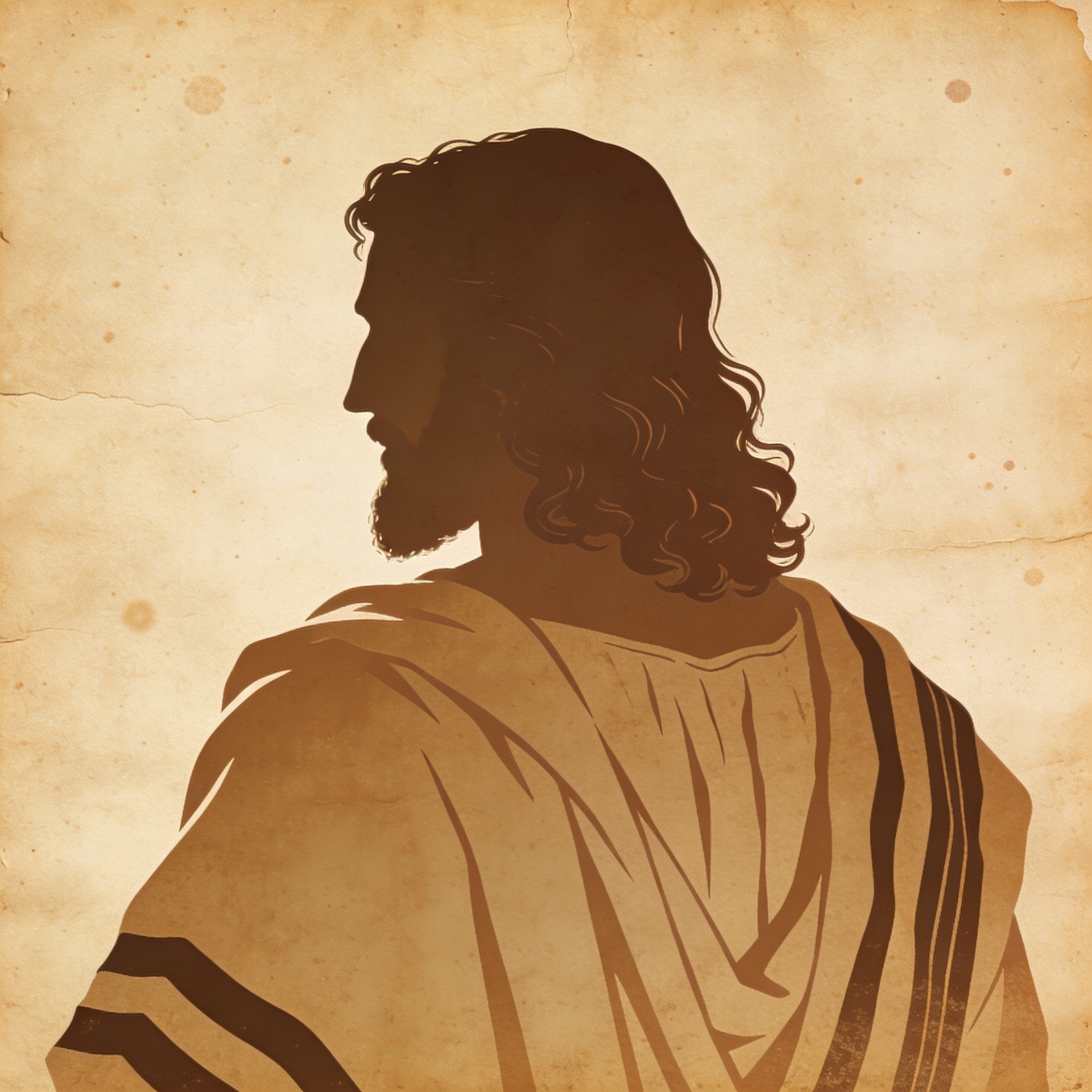
We know why this is hard.
If you're a Jewish person reading about Yeshua of Natzeret, your wariness is completely understandable. So many things have been done in his name that hurt our people — Crusades, Inquisition, blood libels, pogroms, theology that made the Shoah thinkable. None of that was his doing, but it happened, and it shaped how Jewish families have learned to feel about him. That history is real and it deserves to be honored, not waved past.
One thing that may be new, that's offered here with love: the writings called the "New Testament" — the Brit Chadashah — were written almost entirely by Jewish people. Mattityahu, Yochanan, Sha'ul (a Pharisee who studied under Rabban Gamliel), Kefa — all Jewish. They were writing in Greek so the wider world could read them, but they were thinking in Hebrew, citing Tanakh on nearly every page, and arguing the way our sages argued. The church inherited those writings, but our people wrote them.
So when we look at Tanakh and at what this rabbi did, we're not comparing "our book" against "their book." We're looking at writings that are all rooted in Jewish soil, all in conversation with each other. That's the spirit of what follows.
Take your time. Skip what doesn't speak to you. Sit with what does. You're welcome here however you came.
What did Tanakh tell us to look for?
Before asking whether someone might be Mashiach, it helps to know what the prophets described. Their words are scattered across centuries and books — a portrait pieced together from many voices. Here are some of the threads, gathered gently, with the rabbi from Natzeret beside them.
The Brit Chadashah opens with a Hebrew-style toldot: "The book of the genealogy of Yeshua Mashiach, ben David, ben Avraham." (Mattityahu 1:1). Mattityahu traces the royal line through Yosef back to David and Avraham. Lukas offers a second genealogy that goes through David all the way back to Adam.
By the Torah's own standards, legal sonship runs through the father of record — adoption confers full lineage rights, as when Yaakov adopts Yosef's sons in Bereshit 48. So Yeshua, as Yosef's legal son, is reckoned a son of David.
One quiet detail worth knowing: the Temple genealogical records, which made these claims verifiable in his lifetime, were lost when the Temple was destroyed in 70 CE. After that, no future claimant could ever prove their descent the same way. Whether that's providence or coincidence is something thoughtful people can sit with.
Jewish tradition has long understood this verse to point to Mashiach. The Talmud assumes it (Sanhedrin 98b; Pesikta Rabbati 1), and the Targum on Mikhah 5:1 makes it explicit: "from you shall come forth before me the Mashiach."
The gospels say Yeshua was born there, his parents having traveled from Natzeret for a Roman census. And notice the mysterious phrase Mikhah adds: "whose origin is from of old, from ancient days" — מִקֶּדֶם מִימֵי עוֹלָם. The prophet seems to hint at someone whose roots reach further back than his birthplace alone could suggest.
This is a uniquely high promise. Devarim 34:10 tells us "there has not arisen a prophet like Moshe in Yisrael, whom Hashem knew face to face." Not Yeshayahu. Not Yirmiyahu. Not Eliyahu. The one like Moshe was always still ahead.
Some of the parallels between Moshe and Yeshua, simply offered for your reflection:
• Moshe was hidden as an infant from a king who slaughtered Jewish children. So, according to the gospels, was Yeshua.
• Moshe came up out of Mitzrayim. The gospels apply Hoshea 11:1 to Yeshua doing the same.
• Moshe fasted forty days on the mountain. Yeshua fasted forty days in the wilderness.
• Moshe gave Torah from a mountain. Yeshua's central teaching is delivered from a mountain (Mattityahu 5-7).
• Moshe interceded for his people. Yeshua interceded even for those who killed him.
• Moshe knew Hashem face to face. Yochanan 1:18 says of Yeshua: "the only Son... has made him known."
Each parallel on its own could be coincidence. They're offered together so you can see the shape and decide what you make of it.
This chapter is one of the most quietly astonishing pieces of writing in Tanakh. It was given through Yeshayahu the prophet about seven centuries before Yeshua was born. We invite you to read it slowly — perhaps out loud — and simply notice what you notice.
A note offered with care: many Jewish people today are taught that Yeshayahu 53 is "about Israel as a nation." That reading is real and it carries dignity — Israel has indeed suffered for the world. It isn't the only Jewish reading, though, and historically it wasn't even the earliest. The Targum Yonatan, the authoritative Aramaic translation read for centuries in synagogues, opens this passage: "Behold, my servant מְשִׁיחָא (the Mashiach) shall prosper." The Talmud (Sanhedrin 98b) discusses a Mashiach who suffers and bears illness. The Zohar applies it to Mashiach. The Rabbi Moshe Alshich (16th century) wrote that "our rabbis with one voice accept that the prophet speaks of Mashiach." Different readings have lived alongside each other in our tradition for a long time.
What follows is the chapter side by side with the life of the rabbi from Natzeret, offered for your reflection:
When you read these verses together, the picture that emerges is intimate and specific: someone despised, silent before his accusers, scourged, killed with criminals, buried with the rich, his death offered as an asham, who then somehow sees offspring and prolongs his days. We offer it to you and let the text speak for itself.
This is one of the most heartfelt Jewish questions about Yeshua: "if he were Mashiach, wouldn't the world be at peace already?" It deserves a careful answer.
The prophets describe Mashiach with two portraits. He suffers, is rejected, dies (Yeshayahu 53, Daniel 9:26, Zekharyah 12:10). He also reigns and brings peace (Yeshayahu 11). The Talmud noticed the tension. Sanhedrin 98a asks whether Mashiach comes "with the clouds of heaven" (Daniel 7) or "lowly, on a donkey" (Zekharyah 9), and answers: it depends on the time.
From this tension came the framework of Mashiach ben Yosef and Mashiach ben David — the suffering Messiah and the reigning Messiah. Whether you read them as two figures or as one figure who comes twice, the shape is the same: suffering first, peace second.
Followers of Yeshua have always understood his first coming as fulfilling the suffering portrait — enacting the new covenant of Yirmiyahu 31 in his own blood. The second coming is when he brings everlasting peace and his people to his kingdom. The world is not yet at peace, and the ache of that is real, and shared.
Now, about the form that kingdom takes: this is where the Brit Chadashah opens up something beautiful that we might not have expected.
The Lamb himself will be the Temple. When Yochanan was given his vision of the age to come, he wrote: "I saw no temple in the city, for its temple is the Lord God Almighty and the Lamb." (Revelation 21:22). The presence we longed for in the Beit HaMikdash will not be housed in stone — it will be Hashem and his Mashiach themselves, dwelling openly with his people. Yechezkel saw the same Presence return; Yochanan saw what that return finally looks like.
And he saw a city: "the Holy City, New Yerushalayim, coming down out of heaven from God, prepared as a bride adorned for her husband." (Revelation 21:2). A real place, glorious beyond imagining, where Hashem himself wipes every tear from every eye.
And his people will be there with him. Sha'ul, writing as a Pharisee, opens up the mystery in Romans 11: scattered Israel from across the earth, together with gentiles grafted into our olive tree, all belonging to the same Mashiach. "And so all Israel will be saved." (Romans 11:26). Hashem has not cast off his people — he is bringing us home, with the nations alongside, and giving his people places to dwell in the new earth as he pleases.
The peace, the homecoming, and the dwelling with Hashem are all promised. They simply belong to the second coming, not the first.
The Talmud (Sanhedrin 99a, Berakhot 56b) reads this verse as a description of Mashiach. The gospels recount Yeshua entering Yerushalayim on a donkey, with crowds spreading their cloaks and shouting "Hoshia na! Baruch haba b'shem Adonai!" — words drawn straight from Tehillim 118. The scene fits the prophecy closely.
A detail worth lingering on: just a few chapters later in the same prophet, Zekharyah 12:10 reads "They shall look upon me, on the one whom they have pierced, and they shall mourn for him as one mourns for an only son." The prophet who pictured Mashiach riding humbly into the city also pictured him pierced and mourned. The two scenes sit side by side in one book.
Something many of us were never taught
Jewish tradition has, for a long time, spoken of two Messiahs — or one Messiah who comes twice. The Talmud (Sukkah 52a) and many midrashim describe:
משיח בן יוסף
The suffering one. Comes first, is rejected by his brothers, suffers and dies. His giving of himself opens the way for what comes next.
משיח בן דוד
The reigning one. From the line of David. Brings everlasting peace, draws his scattered people home, and dwells with them in the New Yerushalayim — himself the Temple, with grafted-in gentiles alongside.
A note about the title "ben Yosef." It's better understood as typological than literal. The first Yosef — Yaakov's beloved son — was rejected by his brothers, presumed dead, sold for silver, suffered alone, and then was unexpectedly revealed years later as the very one who would save his family from death. Jewish tradition saw in him a picture of the suffering Messiah. So "ben Yosef" doesn't mean "from the tribe of Yosef" — it means like Yosef in his pattern: rejected by his brothers, hidden, then revealed as savior.
Yeshua fulfills both
A suffering Messiah, and a reigning Messiah. The pattern was set in Torah, named in the Talmud, and walked out in the Galil long before anyone was asked to think about it.
He was, through and through, one of us.
The pictures we've inherited often don't match the historical person. Yeshua of Natzeret kept kosher. He wore tzitzit — the gospels mention them explicitly when a woman is healed by touching the corner of his garment, his kanaf, where the tzitzit hang (Mark 6:56, Mattityahu 9:20). He went to shul on Shabbat. He celebrated the moadim — Pesach, Sukkot, Chanukah. He taught Torah in the Beit HaMikdash courtyards. He argued halakha the way every rabbi of his time argued it.
And in his own words, his intention was to honor Torah, not to set it aside: "Do not think I came to abolish the Torah or the Prophets; I came not to abolish but to fulfill. Until heaven and earth pass away, not one yod, not one tag, will pass from the Torah." (Mattityahu 5:17-18).
Listen to how he taught, alongside our sages:
"What is hateful to you, do not do to your neighbor. That is the whole Torah; the rest is commentary — now go and study."
"In everything do to others as you would have them do to you, for this is the Torah and the Prophets."
"Make His will like your own will... nullify your will before His will."
"Father, if you are willing, remove this cup from me. Nevertheless, not my will, but yours, be done."
"Hear, O Israel: Hashem our God, Hashem is One. You shall love Hashem your God with all your heart, with all your soul, and with all your might."
"The first is, 'Hear, O Israel: the Lord our God, the Lord is one; and you shall love the Lord your God with all your heart, soul, mind, and strength.' The second is this: 'You shall love your neighbor as yourself.' There is no commandment greater than these." (Mark 12:29-31)
Something worth noticing about the Brit Chadashah, the part of scripture many of us were taught belongs to someone else: Mattityahu opens with a Hebrew toldot. Yochanan opens with the words of Bereshit: "In the beginning..." Sha'ul, who studied under Rabban Gamliel, writes his letters as a Pharisee, quoting Tanakh constantly, never letting go of his Jewish identity.
Whatever you decide about Yeshua himself, the writings about him grew from Jewish soil — written by our people, about a teacher who walked among us. That's offered not as an argument, but as something you might not have known was available to you.
The brit chadashah — the new covenant.
Something that may be a quiet gift to discover: the "new covenant" Christians speak of isn't a Christian idea at all. It comes from our own prophets. Yirmiyahu gave it. Yechezkel gave it. And both prophets were careful and specific about whom the promise is for.
Read those words gently. Beit Yisrael u-Beit Yehudah. The house of Israel and the house of Yehudah. The בְּרִית חֲדָשָׁה — brit chadashah — is, by its own terms, a covenant with our people. About Torah being written deeply within us, not set aside.
Yechezkel speaks the same promise in his own voice:
A natural next question: in Tanakh, how is a covenant brought into being? The Torah shows us, again and again, the same answer.
Every covenant in Torah is cut with blood.
The Hebrew verb for making a covenant is כָּרַת — karat, literally "to cut." A covenant in Tanakh isn't simply made; it's cut. And what flows from the cutting, again and again, is blood — life offered, life shared, life poured out.
This is the pattern Tanakh sets out. Blood and covenant are woven together in our own scriptures.
"This is my blood of the covenant, which is poured out for many for the forgiveness of sins." — Mattityahu 26:28
Those are the words of Moshe at Sinai. "Hineh dam ha-brit" — "Behold, the blood of the covenant" (Shemot 24:8). Every Jew at that table would have heard the echo. He was speaking the language of Torah, in the language of our people, on the most Jewish night of the year.
In that moment, he was understanding himself to be enacting what Yirmiyahu and Yechezkel had promised — the brit chadashah, in his own blood, with his own people, at our Pesach table.
Yeshua understood himself as the one bringing into being the new covenant Yirmiyahu promised — with Israel and Yehudah — in his own blood, at Pesach.
You're welcome to receive that or to set it aside. We only ask you to see what was being said. It's not "I'm replacing Judaism." It's not "I'm beginning a new religion for the nations." It's "the covenant Yirmiyahu promised our people — Torah on the heart, sins forgiven, Hashem dwelling within — begins here, with my blood, with you."
Whatever you do with it, please see this: the framework is תורה. It is not foreign. It is ours.
And here is something to hold. Yirmiyahu's new covenant looks forward to a day when "no longer shall a man teach his neighbor, saying 'Know Hashem' — for they shall all know me, from the least of them to the greatest." (Yirmiyahu 31:33).
That day has not yet come. The world does not yet know Hashem. This is the ache we all carry. And it's why those who follow Yeshua speak of the covenant as already-and-not-yet — its cutting in blood already accomplished, its fullness — Torah written on every heart, exiles gathered, peace on earth — still ahead of us, longed for by all of us.
Already begun. Not yet complete. כבר ועדיין לא.
There are real questions. They deserve real care.
Here are some of the most common questions Jewish people raise when looking at Yeshua. We offer responses gently, knowing each question is reasonable and each answer is only an invitation to consider further.
This is one of the deepest Jewish concerns, and it's a holy one. The longing for peace is real, and the absence of it grieves all of us.
What we'd offer to consider: the prophets themselves describe Mashiach with two portraits that don't sit easily together. He suffers, is rejected, dies (Yeshayahu 53, Daniel 9:26, Zekharyah 12:10). He reigns and brings peace (Yeshayahu 11). Jewish tradition developed the framework of Mashiach ben Yosef and Mashiach ben David — the suffering Messiah and the reigning Messiah — to hold both pictures together.
Those who follow Yeshua understand him to have come first as the suffering one, fulfilling the new covenant in his own blood. He returns to bring everlasting peace, to draw his scattered people home, and to dwell with them in the New Yerushalayim where, as Yochanan saw, the Lamb himself is the Temple (Revelation 21:22). Sha'ul calls this the mystery: scattered Israel together with grafted-in gentiles, all belonging to one Mashiach (Romans 11). The world is not yet at peace, and the ache is shared by every honest soul. The promise remains ahead of all of us, longed for together.
This is a serious concern, and we honor it. Worshiping any created thing would indeed be avodah zarah.
What's worth gently considering is that the Judaism of Yeshua's day had richer language for Hashem's presence than is sometimes remembered. The Memra (Word) of Hashem appears in the Targums doing what only Hashem does — creating, redeeming, dwelling among his people. The Shekhinah is described as both Hashem himself and as something distinct enough to speak of. Daniel 7 describes a figure called the "Son of Man" who comes with the clouds of heaven and is given dominion such as only Hashem can give.
Some Jewish scholars — Daniel Boyarin of Berkeley in The Jewish Gospels, Alan Segal in Two Powers in Heaven — have written carefully that the idea of a divine Mashiach lived within Jewish thought of that period. None of this proves anything by itself. It only offers room for a more careful consideration than the question sometimes receives.
Yeshua never asked anyone to worship a created being. The texts we have of his own words speak of unity with the Father in language that fits, surprisingly, into categories Judaism already had.
They have. This is real, and it is grievous. The Crusades, the Inquisition, the blood libels, the pogroms, the theological soil that fed the Shoah — all of these happened, and they happened to our people, and people invoking his name did them. We will not minimize this.
What we'd ask you to hold alongside that pain is this: he was himself a Jewish rabbi. His mother was a Jewish woman. His students were Jews. He died as a Jew, killed by Romans. Everything he taught grew from Torah. The historical record of what was later done in his name does not match the man at the center of it, and by every account of how he lived, those acts would have grieved him beyond measure.
He even warned his Jewish followers that persecution from religious authority was coming: "They will put you out of the synagogues; indeed, the hour is coming when whoever kills you will think he is offering service to God." (Yochanan 16:2). He grieved over Yerushalayim and wept for it.
Asking whether he is Mashiach is a different question from joining any institution. The first followers were Jews — tens of thousands of them — who remained Jews. Whatever you may come to believe about him, none of it requires you to leave your people. He never asked that of anyone.
This is a heartfelt question, and there are a few things to consider with care:
Many did, in his own time. The earliest movement was entirely Jewish for decades — thousands of Jews, including kohanim and Pharisees (Acts 6:7, 21:20), saw something in him. The community in Yerushalayim, led by Yeshua's own brother Yaakov, was Torah-observant and large. The eventual separation from the wider Jewish world unfolded gradually, over the late first and second centuries, shaped by Roman pressure after 70 CE, the trauma of the Bar Kokhba revolt, and the growing presence of gentile believers who lacked Jewish formation.
Even our greatest sages have, at times, been mistaken about Mashiach. Rabbi Akiva — Akiva! — declared Bar Kokhba to be Mashiach. He was tragically wrong. The question of who Mashiach is has never been one that consensus alone could settle.
And there's something in Tanakh itself worth noticing. Yeshayahu 53 opens, "Who has believed our report?" — building into the prophecy the expectation that many will not recognize him when he comes. Zekharyah 12:10 describes a recognition that arrives later — "they shall look upon me, on the one whom they have pierced, and they shall mourn." Late recognition is woven into the picture from the start. The story is not finished, and the rabbis are not villains within it.
The pagan practice of human sacrifice is, of course, forbidden — emphatically (Devarim 12:31, Yirmiyahu 7:31). What Yeshua underwent isn't that. He wasn't offered on a pagan altar to appease a deity. He went, freely, as a Jewish person, during Pesach, in a pattern Torah itself had been shaping for centuries.
And there's something quietly woven through our scriptures worth noticing: the idea that righteous suffering can bear meaning for others is deeply Jewish.
• The Akedah — Avraham's near-offering of Yitzchak is invoked every Rosh Hashanah in our liturgy as carrying ongoing merit for Israel. The shofar itself recalls the ram, the substitute.
• The Pesach lamb — its blood spared each home it covered.
• The Yom Kippur sa'ir — the goat that carried Israel's sins away into the wilderness.
• The death of tzaddikim — the Talmud says gently, "the death of the righteous atones" (Moed Katan 28a).
• Yeshayahu 53 itself — "by his stripes we are healed... when his soul makes an asham..."
The principle of righteous suffering bearing weight for others lives within Judaism, gently and consistently. Yeshayahu 53 simply describes someone who would embody it fully.
Tanakh or Brit Chadashah?
A verse will appear. Take a moment with it, then choose where you think it comes from. There's no scoring here that matters and nothing to win or lose — only the quiet joy of seeing how closely our scriptures speak to one another.
What if our sins could really be taken away?
The Torah is holy. The korbanot are holy. The system Hashem gave through Moshe was a gift to our people — a way for sin to be covered, for fellowship with him to be restored, for life to continue. Every Jewish soul who ever participated in those offerings was part of something good and true.
But the Torah itself seems to know it was pointing beyond itself. The korbanot had to be repeated, year after year, generation after generation. Yom Kippur came around again. And again. The blood of bulls and goats covered sin — but it never quite reached into the soul to take sin out. The longing remained.
The Brit Chadashah picks up exactly this thread:
What the korbanot did, beautifully
"The Torah, since it has only a shadow of the good things to come and not the very form of things, can never, by the same sacrifices which they offer continually year by year, make perfect those who draw near."
— Hebrews 10:1
"For it is impossible for the blood of bulls and goats to take away sins."
— Hebrews 10:4
What Yeshua did, once and for all
"By one offering he has perfected for all time those who are being made holy."
— Hebrews 10:14
"Through him forgiveness of sins is proclaimed to you; and through him everyone who believes is justified from everything from which you could not be justified by the Torah of Moshe."
— Acts 13:38-39
Not a contradiction of Torah. A fulfillment of what Torah longed for. The animal offerings were a picture — a holy, true picture — of what would one day come in full. Yeshua, the Lamb our prophets foretold, gave himself once, and the work was complete.
And here is what the Brit Chadashah says he made possible — something the korbanot were always pointing toward but could never accomplish on their own:
The great exchange
This is what Yechezkel promised so long ago: "I will put my Ruach within you and cause you to walk in my statutes" (Yechezkel 36:27). Not righteousness merely declared, but righteousness lived — because Hashem himself comes to dwell within. The new heart and new spirit our own prophet foretold.
Sha'ul, writing as a Pharisee who had once kept Torah with all his strength, said it this way:
This is the invitation, given gently: that you would receive him. Not join an institution. Not abandon your people. Not become someone else. Simply turn to Yeshua — the Jewish Mashiach our own prophets described — and let him give you what no offering could ever quite give: sin taken away entirely, Hashem dwelling within you, righteousness not as something you must achieve but as something you receive.
If you sense even a small turning in your heart, there is nothing complicated to do. You can speak to Hashem directly, in your own words, right where you are. Something honest and simple. Something like this:
"Hashem, you know my heart. I want to know the truth, and I want to know you. If Yeshua is the Mashiach our prophets spoke of, I receive him. I trust that his blood is enough — that he took my sin, and that you would give me his righteousness through your Ruach. Make my heart new. Be my God, and let me be yours."
If you prayed something like that, even tentatively, please know: you have not stopped being Jewish. You have stepped further into what it means to belong to Hashem, with his promised Ruach now within you. The earliest followers of Yeshua were Jews who remained Jews — and you can be too.
Spell the Hebrew words.
Twelve beloved Hebrew words. Tap the right letter from the floating bubbles to spell each one in order. Wrong letter? No worry — just try again. The letters carry their vowel marks so you can hear them too.
Beautiful.
All twelve, spelled.
Tsadik · Ahavah · Kadosh · Mashiach · HaShem · Yeshua · Moshe · Torah · Brit · Adam · Derekh · Emunah
May these words live in you.
Wherever this finds you,
you are loved.
Whether you prayed those words, or set the whole thing aside, or are sitting with it quietly — you are honored here, and held in love.
If you want to keep going, here are some gentle next steps: